
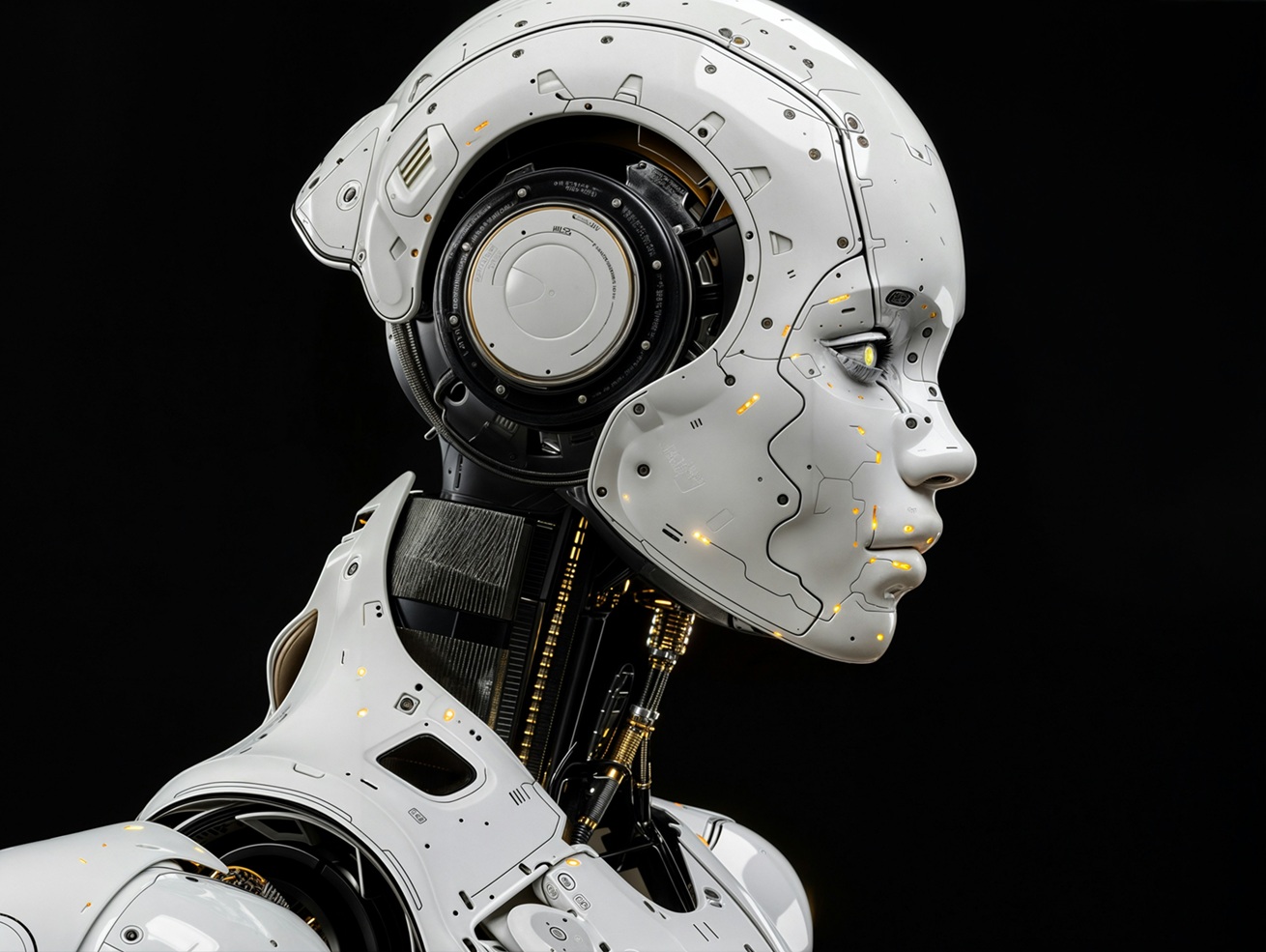
Robotics is entering a new era.
Advances in artificial intelligence are transforming robots from highly specialized machines into intelligent systems capable of learning, adapting, perceiving, and making decisions in complex environments.
For decades, robots have played an important role in manufacturing, logistics, healthcare, and industrial operations. Traditionally, these systems operated through predefined instructions and structured workflows.
Artificial intelligence is fundamentally changing this model.
By combining AI with robotics, organizations can create machines capable of understanding their environment, interpreting data, interacting with people, and performing increasingly sophisticated tasks.
The convergence of artificial intelligence and robotics may become one of the most significant technology shifts of the coming decade.
The Rise of Intelligent Robotics
Modern robotics is evolving beyond automation.
Artificial intelligence enables robots to:
- Learn from experience
- Adapt to changing conditions
- Recognize objects and environments
- Interpret language
- Make decisions
- Collaborate with humans
These capabilities are creating a new generation of intelligent machines capable of operating in environments that were previously difficult to automate.
As AI models become more advanced, robotics systems are becoming increasingly capable, flexible, and autonomous.
Why AI Is Transforming Robotics
Traditional robots excelled in predictable environments.
However, many real-world situations involve uncertainty and variability.
Artificial intelligence helps robots address these challenges by enabling:
Computer Vision
Robots can identify:
- Objects
- People
- Equipment
- Obstacles
- Environmental conditions
Computer vision allows robots to navigate and interact with the physical world more effectively.
Machine Learning
Machine learning enables robots to improve performance over time through data and experience.
This allows robotic systems to:
- Optimize workflows
- Improve accuracy
- Adapt to changing environments
- Enhance decision-making
Natural Language Processing
Advances in language models are improving human-machine interaction.
Future robots may increasingly understand and respond to natural human communication.
Autonomous Decision-Making
AI enables robotic systems to make decisions without requiring constant human intervention.
This capability is becoming increasingly important in logistics, transportation, healthcare, and industrial operations.
AI and the Future of Manufacturing
Manufacturing remains one of the largest applications for robotics.
Artificial intelligence is helping manufacturers improve:
- Productivity
- Quality control
- Predictive maintenance
- Supply chain efficiency
- Resource utilization
AI-powered robots can adapt to changing production requirements while improving operational performance.
As global competition increases, intelligent manufacturing may become a critical competitive advantage.
The Intelligent Factory
The factory of the future will be increasingly powered by:
- AI
- Robotics
- Sensors
- Data analytics
- Automation platforms
These technologies work together to create intelligent production environments capable of:
- Self-monitoring
- Self-optimization
- Predictive maintenance
- Automated quality assurance
The result is greater efficiency, resilience, and productivity.
Humanoid Robotics
Humanoid robots have become one of the most discussed areas of robotics innovation.
Powered by advances in artificial intelligence, humanoid systems are being designed to operate in environments built for people.
Potential applications include:
- Manufacturing
- Warehousing
- Healthcare
- Hospitality
- Retail
- Public services
While large-scale deployment remains in its early stages, many industry leaders believe humanoid robotics could become a major driver of economic transformation over the next decade.
The long-term vision is not replacing people.
It is augmenting human capabilities and addressing workforce shortages.
Robotics in Healthcare
Healthcare represents one of the most promising opportunities for intelligent robotics.
Applications include:
- Surgical assistance
- Patient monitoring
- Rehabilitation support
- Hospital logistics
- Elder care
- Clinical operations
AI-powered healthcare robots may help improve efficiency while supporting healthcare professionals and enhancing patient outcomes.
As healthcare systems face increasing pressure from aging populations and workforce shortages, robotics may become an important part of future healthcare delivery models.
Logistics and Supply Chains
Artificial intelligence is transforming logistics and supply chain operations through robotics.
Organizations are deploying robotic systems to support:
- Warehousing
- Inventory management
- Order fulfillment
- Material handling
- Transportation optimization
These systems can improve speed, accuracy, and operational efficiency while helping organizations respond to growing customer expectations.
The future supply chain will likely be increasingly autonomous.
Robotics and National Defence
Robotics is becoming an increasingly important component of national defence and security strategies.
AI-powered systems may support:
- Surveillance
- Reconnaissance
- Logistics
- Search and rescue
- Critical infrastructure protection
Governments around the world are investing heavily in autonomous systems and intelligent defence technologies.
As geopolitical competition increases, robotics may play a growing role in national security and resilience.
The Economic Impact of Robotics
The convergence of AI and robotics has the potential to generate significant economic value.
Potential benefits include:
- Increased productivity
- Improved efficiency
- New business models
- Enhanced competitiveness
- Workforce augmentation
- Innovation acceleration
For many industries, robotics may become one of the most important productivity tools of the next generation.
The economic impact could extend across virtually every sector of the economy.
Canada’s Opportunity in AI and Robotics
Canada is well-positioned to participate in the global robotics economy.
The country benefits from:
- World-class AI research institutions
- Leading universities
- Strong engineering talent
- Advanced manufacturing expertise
- Growing innovation ecosystems
Organizations such as Mila, Vector Institute, Amii, and leading Canadian universities continue to advance research that may contribute to future robotics innovation.
As Canada invests in AI infrastructure, commercialization, and advanced manufacturing, robotics represents an important opportunity for economic growth and global competitiveness.
Governance, Safety, and Trust
As robotics systems become more autonomous, governance becomes increasingly important.
Organizations must address:
- Safety
- Cybersecurity
- Privacy
- Accountability
- Transparency
- Responsible AI practices
Public trust will play a critical role in the adoption of intelligent robotic systems.
Strong governance frameworks can help ensure innovation occurs responsibly while protecting individuals, organizations, and society.
The future of robotics will depend not only on technological capability but also on trust.
The Next Era of Human-Machine Collaboration
The future workplace will likely involve closer collaboration between humans and intelligent machines.
Rather than replacing people, many robotic systems will augment human capabilities by:
- Automating repetitive tasks
- Improving safety
- Supporting decision-making
- Enhancing productivity
Organizations that successfully integrate humans and intelligent machines may gain significant advantages in efficiency, innovation, and competitiveness.
Human-machine collaboration is becoming a defining characteristic of the intelligence age.
Looking Ahead
Artificial intelligence is transforming robotics from automation tools into intelligent systems capable of learning, adapting, and collaborating.
The impact extends far beyond manufacturing.
Healthcare, logistics, transportation, public services, defence, and countless other sectors are beginning to explore the possibilities created by intelligent robotics.
For businesses, governments, and investors, the convergence of AI and robotics represents one of the most significant innovation opportunities of the coming decade.
The future of robotics will be powered by artificial intelligence.
And the future of artificial intelligence will increasingly be expressed through intelligent machines operating in the physical world.
The age of intelligent robotics has begun.
About Canadian AI ™
Canadian A I™ helps organizations navigate AI adoption through advisory services, governance frameworks, readiness assessments, and strategic implementation support.
Our mission is to accelerate responsible AI adoption across Canada while helping organizations unlock measurable business value.